BUN (Blood urea nitrogen, Urea nitrogen, Serum urea nitrogen, BUN, serum, Urea (the name used on UK and many international lab reports))
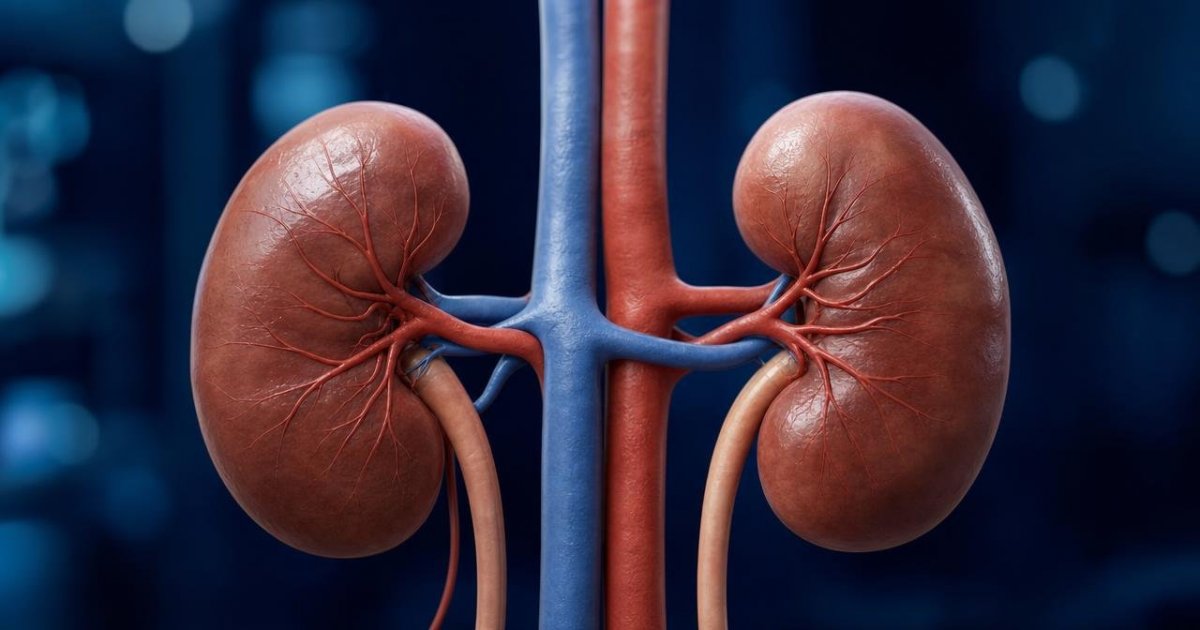
BUN stands for blood urea nitrogen. When your body digests protein — from food or from normal tissue turnover — the liver converts the leftover nitrogen into a waste compound called urea. Urea travels through the bloodstream to the kidneys, which filter it out into urine. The BUN test measures how much urea nitrogen is circulating in your blood at the moment of the draw, which makes it a quick window into the whole loop: how much urea your body is producing, how much fluid is in your bloodstream, and how well your kidneys are keeping up.
Because all three of those things move the number, BUN is best thought of as a screening and context test rather than a verdict on your kidneys. A high value can mean the kidneys are struggling — but it can just as easily mean you were dehydrated that morning, ate a lot of protein, take a steroid or water pill, or have slow bleeding in the digestive tract (digested blood is protein, and it raises urea). A low value usually means less urea is being made, most often from a lighter-protein diet, generous hydration, or pregnancy, with advanced liver disease as the important but less common exception.
That is why clinicians almost never interpret BUN alone. Its partner is creatinine, a waste product that hydration and diet barely touch. When BUN rises but creatinine stays normal, the cause is usually outside the kidneys — dehydration, diet, medications, or bleeding. When BUN and creatinine rise together, the kidneys themselves come under scrutiny. If your report includes both, read them as a pair.
Reference ranges
Adults
Bands on this page use the 6–24 mg/dL adult reference range cited by Mayo Clinic; many other references and US labs use narrower ranges such as 6–20 or 7–20 mg/dL (MedlinePlus cites 6–20 mg/dL). Most US lab reports use a single adult range rather than separate male and female ranges, though some references (for example Cleveland Clinic: about 6–21 mg/dL for adult women and 8–24 mg/dL for adult men) publish sex-specific values. Where US labs define a formal critical (panic) alert for BUN, it is most often set around 100 mg/dL, with some labs using cutoffs as low as 80 mg/dL; our critically-high band therefore begins at 80 mg/dL, and because this page's scale tops out at 100 mg/dL, any result at or above 100 falls in that band.
How to read your result
Start by locating your value against your own lab's reference range, since conventions differ: Mayo Clinic cites roughly 6–24 mg/dL for adults, while MedlinePlus and many labs use 6–20 or 7–20 mg/dL. Below range is usually the calmer direction — it most often reflects diet, hydration, or pregnancy, and only occasionally points to reduced urea production by the liver. Above range, size matters: values a few points high are commonly hydration or diet and often normalize on a well-hydrated repeat test, values in the 30s and low 40s need an actual workup within days to weeks, values from the mid-40s up call for same-day or next-day attention, and values of 60 mg/dL and above are severe — from about 80 mg/dL upward, the edge of formal laboratory critical-alert territory, treat the result as an emergency.
Then check the creatinine from the same draw before drawing any conclusion. A BUN that is high out of proportion to creatinine points toward dehydration, digestive-tract bleeding, or medications; BUN and creatinine elevated together point toward the kidneys. And in every case, symptoms outrank the number — very little urine, confusion, persistent vomiting, or black stools mean urgent care no matter what the BUN reads.
What can shift this value
- Hydration — even mild dehydration concentrates urea and raises BUN, while heavy fluid intake lowers it
- Dietary protein — high-protein diets and protein supplements raise BUN; low-protein and plant-based diets lower it
- Medications — diuretics, corticosteroids, some antibiotics, and NSAIDs can all push BUN up
- Bleeding in the stomach or intestines, which adds a large protein load the liver converts to urea
- Liver function — a liver that makes less urea produces a lower BUN regardless of kidney health
- Age — BUN drifts upward gradually as kidney reserve declines over the decades
- Pregnancy, which expands blood volume and increases kidney clearance, lowering BUN
- Muscle mass and catabolic states — severe illness, burns, or high-dose steroids increase protein breakdown and raise BUN
- Heart failure, which reduces blood flow to the kidneys and slows urea clearance
- Lab-to-lab variation — reference ranges differ (6–24 vs 6–20 or 7–20 mg/dL), so the same value can be flagged at one lab and not another
When it's tested
BUN is a standard component of the basic metabolic panel (BMP) and comprehensive metabolic panel (CMP), so most people get it with routine annual blood work whether or not kidney trouble is suspected. It also appears on renal (kidney) function panels, in monitoring for people with known kidney disease, diabetes, or high blood pressure, before some imaging studies that use contrast dye, and when starting or adjusting medications that affect the kidneys, such as diuretics or certain blood pressure drugs. It is almost always ordered alongside creatinine, and many reports also print the BUN-to-creatinine ratio.
US reports show BUN in mg/dL, while UK and most international reports show 'urea' in mmol/L — multiply BUN in mg/dL by 0.357 to convert (a BUN of {value} {unit} is about {si_value} {si_unit}).
Frequently asked questions
Is your value mg/dL a normal BUN level?
For adults, Mayo Clinic cites a BUN reference range of about 6–24 mg/dL, though many references and labs use narrower ranges such as 6–20 or 7–20 mg/dL. Whether your value mg/dL counts as normal depends on your own lab's range and, just as importantly, on the creatinine measured from the same blood draw.
What does a high BUN level mean?
A high BUN means urea is building up in the blood faster than the kidneys are clearing it. The most common reasons are dehydration, a high-protein diet, reduced kidney function, certain medications, or bleeding in the digestive tract. Clinicians read BUN together with creatinine to tell these apart, so the two values from the same report matter as a pair.
Can dehydration alone explain a BUN of your value mg/dL?
Often, yes — dehydration is one of the most common reasons BUN rises, because the kidneys hold on to urea when the body is short on fluid. The classic clue is a high BUN with a normal or only slightly raised creatinine. Rehydrating and repeating the test is a standard way to check, but let your clinician make that call, especially if you have heart or kidney conditions that limit fluids.
What is a dangerously high BUN level?
There is no single cutoff, because danger depends on the cause, how fast the value rose, and your symptoms. As a rough guide, values above about 50 mg/dL suggest a serious problem such as significant kidney impairment, and laboratories that define a formal critical (panic) alert for BUN typically set it around 100 mg/dL and above, with some labs using cutoffs as low as 80 mg/dL. Symptoms matter as much as the number: very little urine, confusion, persistent vomiting, or black stools mean urgent care regardless of the exact value.
What does a low BUN level mean?
Low BUN usually means the body is making less urea, not that the kidneys are failing — in fact, low values are far less often a medical problem than high ones. Common explanations are a low-protein diet, generous hydration, and pregnancy. The main exception worth knowing about is advanced liver disease, since a struggling liver produces less urea.
How can I lower my BUN level?
That depends entirely on why it is high, so the honest first step is finding the cause with your clinician. If dehydration is the driver, steady fluid intake usually brings BUN down within days. If a very high-protein diet or supplements are contributing, easing back may help. But when the cause is reduced kidney function, heart failure, or bleeding, the underlying condition — not the BUN number — is what needs treatment, and self-directed fixes like forcing fluids or slashing protein can backfire. Never stop a prescribed medication to lower a lab value without medical advice.
Browse BUN values
All 99 values from 2 to 100 mg/dL
Sources
- BUN (Blood Urea Nitrogen) Test — MedlinePlus, US National Library of Medicine
- Blood urea nitrogen (BUN) test — Mayo Clinic
- Blood Urea Nitrogen (BUN) Test — Cleveland Clinic
- BUN and Creatinine — Clinical Methods: The History, Physical, and Laboratory Examinations, 3rd edition — NCBI Bookshelf, National Library of Medicine
Educational information, not medical advice. Full disclaimer