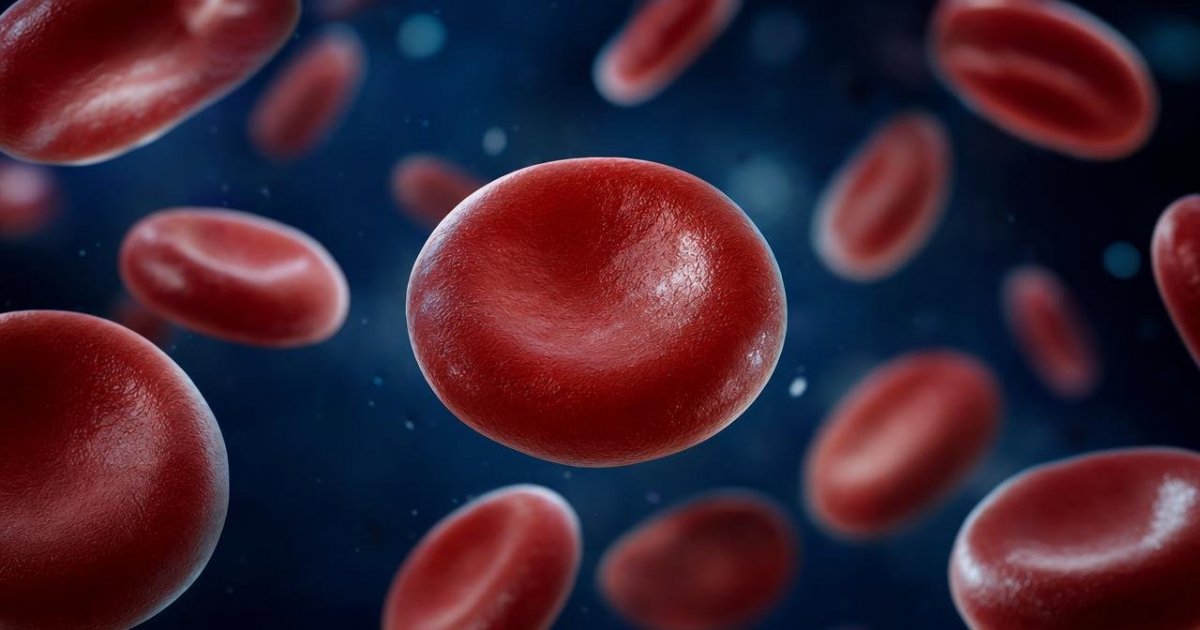
RBC (Red blood cell count, Red blood cells, RBC count, Erythrocytes, Erythrocyte count, Red cell count, Red corpuscle count)
The RBC count tells you how many red blood cells are circulating in each microliter of your blood — reported in the US as millions per microliter (x10⁶/µL). Red blood cells are your body's oxygen couriers: each one is packed with hemoglobin, picks up oxygen in the lungs, and delivers it to muscles, organs, and the brain. Your bone marrow releases roughly two million new red cells every second, and each cell survives about 120 days before the spleen and liver recycle it.
Production is controlled by a feedback loop. When your kidneys sense low oxygen, they release a hormone called erythropoietin (EPO), which tells the marrow to make more red cells. That is why conditions involving low oxygen — smoking, lung disease, sleep apnea, high altitude — push the count up, while kidney disease, marrow problems, and nutrient deficiencies pull it down. Blood loss lowers the count directly.
On a lab report, the RBC count almost never stands alone. It arrives as part of a complete blood count (CBC) alongside hemoglobin, hematocrit, and the red cell indices (MCV, MCH, MCHC, RDW). Doctors weigh all of these together: the RBC count says how many cells you have, while the indices describe their size and hemoglobin content — and that combination is what actually points to a cause.
Reference ranges
Men
For adult men, the typical reference range is about 4.7 to 6.1 x10⁶/µL, following the MedlinePlus convention; your lab's printed range may differ slightly.
| Range (x10⁶/µL) | Classification |
|---|---|
| 2–2.5 | Critically low |
| 2.5–3.5 | Markedly low |
| 3.5–4.4 | Low |
| 4.4–4.7 | Borderline low |
| 4.7–6.1 | Normal |
| 6.1–6.4 | Borderline high |
| 6.4–6.8 | High |
| 6.8–7 | Very high |
Women
For adult women, the typical reference range is about 4.2 to 5.4 x10⁶/µL, following the MedlinePlus convention; your lab's printed range may differ slightly.
How to read your result
A low RBC count generally means anemia — too few oxygen carriers — with iron deficiency, B12/folate deficiency, blood loss, kidney disease, and chronic illness heading the list of causes. A high count (erythrocytosis) generally means the blood is concentrated (dehydration) or the body is compensating for low oxygen (smoking, sleep apnea, lung disease, altitude); less often, the marrow itself overproduces cells, as in polycythemia vera.
Two habits make interpretation much more reliable. First, judge the number against the range for your sex on your own lab report, since men normally run higher than women and labs differ slightly. Second, look at the trend and the companions: a stable, mildly off result with normal hemoglobin and hematocrit is usually minor, while a count that keeps moving in one direction — or that is abnormal together with hemoglobin, hematocrit, and the indices — deserves a proper workup.
What can shift this value
- Hydration — dehydration concentrates the blood and raises the count; overhydration or IV fluids dilute it
- Smoking and vaping — chronic carbon monoxide exposure drives extra red cell production
- Altitude — living at or traveling to high elevation raises the count within weeks
- Pregnancy — plasma volume expands faster than red cells, lowering the count even when healthy
- Menstrual blood loss — heavy periods are the most common cause of low counts in premenopausal women
- Testosterone and anabolic steroids — stimulate red cell production and can push counts above range
- Medications — chemotherapy, some antibiotics, and anti-seizure drugs can lower the count; diuretics can raise it by concentrating blood
- Recent blood donation or surgery — temporarily lowers the count for several weeks
- Sleep apnea and lung disease — chronic low oxygen raises the count over time
- Lab-to-lab variation — different analyzers and reference ranges can shift borderline results
When it's tested
The RBC count is part of every complete blood count (CBC), one of the most commonly ordered blood tests. You will see it on routine physicals and annual panels, in workups for fatigue, dizziness, or unexplained bleeding, before surgery, during pregnancy care, and when monitoring chemotherapy, kidney disease, or a known blood disorder. It is not part of a basic or comprehensive metabolic panel (BMP/CMP) or a lipid panel — those measure chemistry, not blood cells.
US reports use x10⁶/µL (million cells per microliter); labs in the UK and much of the world use x10¹²/L — the numbers are identical (a 5.0 x10⁶/µL equals 5.0 x10¹²/L), so no conversion is needed.
Frequently asked questions
Is your value a normal RBC count?
It depends on your sex and your lab's range. Typical adult reference ranges are about 4.7–6.1 x10⁶/µL for men and 4.2–5.4 x10⁶/µL for women (MedlinePlus convention). Compare your value to the range printed on your own report, and remember that hemoglobin and hematocrit matter just as much as this single number.
What does a low RBC count mean?
A low RBC count usually means anemia — your blood has fewer oxygen-carrying cells than it should. The most common causes are iron deficiency (from menstrual or gastrointestinal blood loss), vitamin B12 or folate deficiency, chronic kidney disease, and chronic inflammation. How urgent it is depends on how low the number is, whether it is falling, and whether you have symptoms like fatigue, breathlessness, or a racing heart. Your clinician will read it alongside hemoglobin, hematocrit, and MCV to narrow down the cause.
What causes a high red blood cell count?
The most common causes are things that concentrate the blood or lower your oxygen: dehydration, smoking, obstructive sleep apnea, chronic lung disease, and living at high altitude. Testosterone therapy and anabolic steroids also raise the count. Less commonly, the bone marrow overproduces red cells on its own — a condition called polycythemia vera, usually linked to a JAK2 gene mutation. The first step is always a well-hydrated repeat test to see whether the elevation is real and persistent.
Can dehydration really change my RBC count?
Yes. The RBC count measures cells per volume of blood, so when you are dehydrated the plasma (liquid) portion shrinks and the same cells become more concentrated — the count reads higher without your body making a single extra cell. The reverse also happens: overhydration or IV fluids can dilute the blood and make the count read lower. This is why clinicians often repeat a borderline result when you are normally hydrated before drawing conclusions.
How can I raise a low RBC count?
It depends entirely on the cause, which is why testing comes before treatment. Iron-deficiency anemia responds to iron (through diet, supplements, or IV iron) plus fixing the source of blood loss; B12 or folate deficiency responds to those specific vitamins; anemia from kidney disease may need erythropoietin-stimulating medication. Taking iron 'just in case' can mask the real diagnosis and cause side effects, so let your clinician identify the cause first — most anemias are very treatable once the reason is known.
Why are RBC ranges different for men and women?
Testosterone stimulates red blood cell production, so men naturally run higher counts (about 4.7–6.1 x10⁶/µL) than women (about 4.2–5.4 x10⁶/µL). Menstrual blood loss also lowers average counts in premenopausal women. After menopause, women's counts often drift up slightly, but labs still apply sex-specific ranges. This is also why testosterone therapy — in anyone — can push the RBC count above range.
Does an abnormal RBC count mean cancer?
Usually not. The overwhelming majority of abnormal RBC counts are caused by everyday problems: iron or vitamin deficiency, blood loss, dehydration, smoking, sleep apnea, or kidney disease. Blood cancers like leukemia and bone marrow disorders like polycythemia vera are on the list of possible causes, but they are far less common, and they typically come with other abnormal results on the same CBC. An abnormal count is a reason for follow-up testing — not a diagnosis.
Browse RBC values
Sources
- Red Blood Cell (RBC) Count — MedlinePlus (U.S. National Library of Medicine)
- RBC count — Medical Encyclopedia — MedlinePlus (U.S. National Library of Medicine)
- Complete blood count (CBC) — Mayo Clinic
- Anemia (StatPearls) — NCBI Bookshelf / StatPearls
- Polycythemia vera — Symptoms and causes — Mayo Clinic
Educational information, not medical advice. Full disclaimer