RDW (Red cell distribution width, Red blood cell distribution width, RDW-CV, RDW-SD, Erythrocyte distribution width, RCDW)
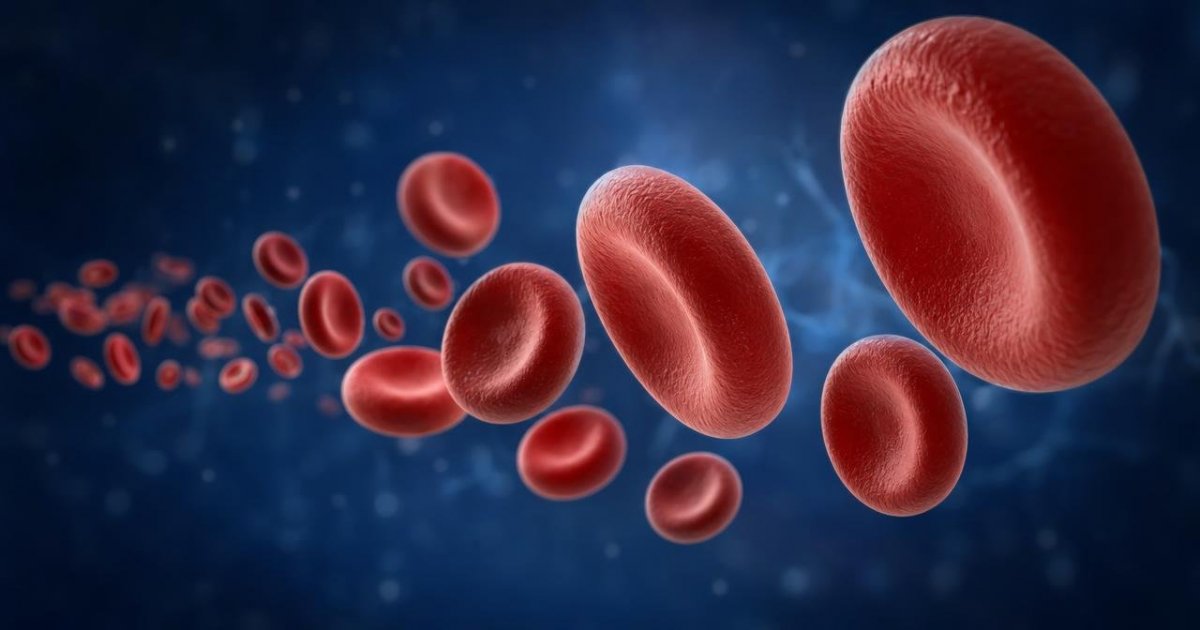
RDW stands for red cell distribution width. Despite the name, it has nothing to do with how wide your blood cells are — it measures how much your red blood cells vary in size compared with one another. Healthy red cells are produced at a fairly consistent size, so most people's cells look like a uniform crowd. When something disturbs red cell production — low iron, low vitamin B12 or folate, blood loss, or certain chronic diseases — new cells come out smaller or larger than the older ones, the crowd becomes a mix of sizes, and RDW rises.
RDW is calculated automatically every time a complete blood count (CBC) is run, so you did not need a special order to get this number. On its own it diagnoses nothing; its real job is to help interpret the rest of the CBC. When hemoglobin is low, RDW helps sort out why: iron deficiency typically pushes RDW up, while some inherited conditions like thalassemia trait tend to leave it normal even though the cells are small. RDW can also rise before hemoglobin falls, which makes it a useful early clue that a deficiency is developing.
Most US labs report RDW as a percentage (technically RDW-CV) with a typical adult range of about 11.5% to 14.5%, though some labs draw the upper line at 15% or slightly above. A low RDW is one of the rare lab findings with essentially no clinical meaning — it just means your cells are very uniform. A high RDW is common, usually explainable, and in most cases traces back to a fixable nutrient deficiency.
Reference ranges
Adults
Most US labs consider an adult RDW-CV of roughly 11.5% to 14.5% normal (some labs extend the upper limit to about 15%, and MedlinePlus cites slightly different figures for men and women); this ladder follows the widely used 11.5–14.5% convention.
How to read your result
Read RDW in one direction: only high values matter. A result below the range means unusually uniform cells and is not associated with disease — no follow-up is needed if the rest of the CBC is normal. A result above the range means mixed cell sizes, and the higher it goes, the more likely there is a specific cause to find: mild elevations (roughly 14.5–16%) often reflect early deficiency, lab cutoff differences, or recent blood loss, while values above 16% usually accompany a real disturbance in red cell production or survival.
Always pair RDW with MCV (average cell size) and hemoglobin. High RDW with low MCV suggests iron deficiency; high RDW with high MCV suggests B12 or folate deficiency or liver disease; high RDW with normal MCV can mean early deficiency, mixed deficiencies, or recent blood loss. A high RDW with completely normal hemoglobin and MCV is often an early warning worth a simple ferritin, B12, and folate check — not an emergency.
What can shift this value
- Iron stores — iron deficiency is the single most common reason RDW rises
- Vitamin B12 and folate levels, which control how red cells mature
- Recent blood loss or blood donation, which triggers a wave of new, larger young cells
- Recent blood transfusion — donor cells of a different size mix with your own and can raise RDW for weeks
- Active treatment for anemia — RDW often rises temporarily when iron or vitamin therapy starts working
- Pregnancy, which shifts red cell production and plasma volume
- Heavy alcohol use and chronic liver disease
- Chronic inflammation, kidney disease, and other long-term illnesses
- Analyzer and lab differences — cutoffs vary, and RDW-CV versus RDW-SD are entirely different scales
- Rare sample artifacts, such as cold agglutinins clumping cells in the tube
When it's tested
RDW is included automatically in every complete blood count (CBC), the most commonly ordered blood panel — whether run for an annual physical, fatigue workup, pre-surgical clearance, or anemia follow-up. It is not part of chemistry panels like the CMP or a lipid panel, and there is no stand-alone RDW test; if you have a CBC result, you have an RDW.
RDW-CV is a unitless percentage that reads the same in the US, UK, and everywhere else — there is no SI conversion — but if your report shows RDW-SD in femtoliters (fL, typically around 39–46), that is a different measurement on a different scale, not a converted version of the percentage.
Frequently asked questions
Is your value a normal RDW level?
Most US labs consider an adult RDW of about 11.5% to 14.5% normal, though some labs extend the upper limit to about 15%. Always compare your number to the reference range printed on your own report, since cutoffs vary slightly between labs.
What does a high RDW mean?
A high RDW means your red blood cells vary in size more than normal — a mix of unusually small and unusually large cells. The most common causes are iron deficiency and vitamin B12 or folate deficiency, followed by recent blood loss, liver disease, red cell breakdown, or a recent transfusion. RDW cannot tell these apart by itself; the rest of your CBC and simple follow-up tests can.
Can RDW be high when hemoglobin is normal?
Yes. RDW often rises before hemoglobin falls, so a high RDW with normal hemoglobin can be an early warning that iron, vitamin B12, or folate stores are running low. It can also follow recent blood donation or blood loss that your body is already correcting. A simple set of follow-up tests — usually ferritin, B12, and folate — can check for a developing deficiency before it becomes anemia.
Is a low RDW something to worry about?
No. A low RDW simply means your red blood cells are very uniform in size, and no disease is diagnosed from a low RDW alone. If your hemoglobin, MCV, and the rest of your CBC are normal, a low RDW needs no follow-up beyond mentioning it at your next visit.
How can I lower a high RDW?
You lower RDW by treating whatever is causing it — there is no way to change RDW directly. If testing shows iron, B12, or folate deficiency, supplementing under your clinician's guidance corrects the RDW over roughly two to four months as new, uniform red cells replace old ones. RDW can even rise temporarily at the start of treatment as a wave of new cells enters the blood, so don't be alarmed by an early bump. Avoid starting iron pills on your own before testing — it can mask the real cause.
What is the difference between RDW-CV and RDW-SD?
Both measure the same thing — variation in red cell size — but on different scales. RDW-CV is a percentage (typical adult range about 11.5–14.5%) and is what most US labs report as 'RDW.' RDW-SD is reported in femtoliters (fL), with a typical range of roughly 39–46 fL, and is less affected by the average cell size. If your report shows a number in the 40s with 'fL' next to it, you are looking at RDW-SD, and percentage-based ranges do not apply to it.
Does a high RDW mean cancer?
Almost never. The overwhelming majority of high RDW results are explained by iron, B12, or folate deficiency, blood loss, or chronic illness — not cancer. Research has linked higher RDW to worse outcomes in various diseases, but that makes it a general, non-specific marker of illness and inflammation, not a cancer test. In older adults with a persistently high RDW and other unexplained CBC abnormalities, clinicians may check for bone marrow disorders, which is one reason follow-up matters — but a high RDW by itself is not a reason to fear cancer.
Browse RDW values
All 201 values from 10 to 30 %
- 10.0
- 10.1
- 10.2
- 10.3
- 10.4
- 10.5
- 10.6
- 10.7
- 10.8
- 10.9
- 11.0
- 11.1
- 11.2
- 11.3
- 11.4
- 11.5
- 11.6
- 11.7
- 11.8
- 11.9
- 12.0
- 12.1
- 12.2
- 12.3
- 12.4
- 12.5
- 12.6
- 12.7
- 12.8
- 12.9
- 13.0
- 13.1
- 13.2
- 13.3
- 13.4
- 13.5
- 13.6
- 13.7
- 13.8
- 13.9
- 14.0
- 14.1
- 14.2
- 14.3
- 14.4
- 14.5
- 14.6
- 14.7
- 14.8
- 14.9
- 15.0
- 15.1
- 15.2
- 15.3
- 15.4
- 15.5
- 15.6
- 15.7
- 15.8
- 15.9
- 16.0
- 16.1
- 16.2
- 16.3
- 16.4
- 16.5
- 16.6
- 16.7
- 16.8
- 16.9
- 17.0
- 17.1
- 17.2
- 17.3
- 17.4
- 17.5
- 17.6
- 17.7
- 17.8
- 17.9
- 18.0
- 18.1
- 18.2
- 18.3
- 18.4
- 18.5
- 18.6
- 18.7
- 18.8
- 18.9
- 19.0
- 19.1
- 19.2
- 19.3
- 19.4
- 19.5
- 19.6
- 19.7
- 19.8
- 19.9
- 20.0
- 20.1
- 20.2
- 20.3
- 20.4
- 20.5
- 20.6
- 20.7
- 20.8
- 20.9
- 21.0
- 21.1
- 21.2
- 21.3
- 21.4
- 21.5
- 21.6
- 21.7
- 21.8
- 21.9
- 22.0
- 22.1
- 22.2
- 22.3
- 22.4
- 22.5
- 22.6
- 22.7
- 22.8
- 22.9
- 23.0
- 23.1
- 23.2
- 23.3
- 23.4
- 23.5
- 23.6
- 23.7
- 23.8
- 23.9
- 24.0
- 24.1
- 24.2
- 24.3
- 24.4
- 24.5
- 24.6
- 24.7
- 24.8
- 24.9
- 25.0
- 25.1
- 25.2
- 25.3
- 25.4
- 25.5
- 25.6
- 25.7
- 25.8
- 25.9
- 26.0
- 26.1
- 26.2
- 26.3
- 26.4
- 26.5
- 26.6
- 26.7
- 26.8
- 26.9
- 27.0
- 27.1
- 27.2
- 27.3
- 27.4
- 27.5
- 27.6
- 27.7
- 27.8
- 27.9
- 28.0
- 28.1
- 28.2
- 28.3
- 28.4
- 28.5
- 28.6
- 28.7
- 28.8
- 28.9
- 29.0
- 29.1
- 29.2
- 29.3
- 29.4
- 29.5
- 29.6
- 29.7
- 29.8
- 29.9
- 30.0
Sources
- RDW (Red Cell Distribution Width) — MedlinePlus (National Library of Medicine)
- RDW Blood Test — Cleveland Clinic
- Complete Blood Count (CBC) — Mayo Clinic
- Complete Blood Count (CBC) — MedlinePlus (National Library of Medicine)
- Anemia (StatPearls) — NCBI Bookshelf
Educational information, not medical advice. Full disclaimer