MCH (Mean corpuscular hemoglobin, Mean cell hemoglobin, Mean corpuscular haemoglobin (UK spelling), MCH blood test, Average hemoglobin per red blood cell, Red blood cell (RBC) index)
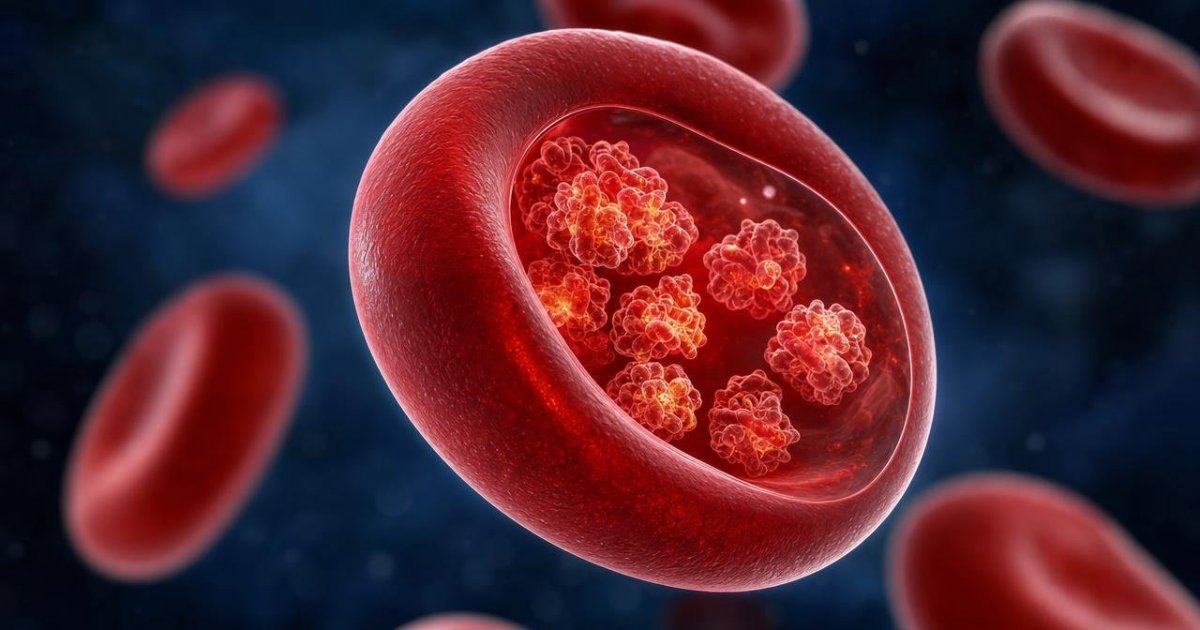
MCH — mean corpuscular hemoglobin — tells you how much hemoglobin, on average, is packed into each of your red blood cells. Hemoglobin is the iron-rich protein that grabs oxygen in your lungs and delivers it everywhere else, so MCH is essentially a per-cell cargo report: are your red cells carrying a full load, running light, or oversized and overloaded?
You'll find MCH on every complete blood count (CBC), listed with its sibling indices MCV (cell size) and MCHC (hemoglobin concentration). The analyzer doesn't measure MCH directly — it divides your total hemoglobin by your red cell count. That's worth knowing because it means MCH moves in lockstep with those two numbers, and anything that distorts either one (including a handful of lab artifacts) distorts MCH too.
Clinicians mostly use MCH as an anemia classifier. When hemoglobin is low, a low MCH points the investigation toward iron deficiency or thalassemia, while a high MCH points toward vitamin B12 or folate problems, alcohol, liver or thyroid disease, and certain drugs. Even when hemoglobin is normal, a drifting MCH can be an early tip-off that iron or B12 stores are quietly running down.
Reference ranges
Adults
Most US laboratories consider roughly 27 to 33 pg per cell normal for adults of any sex, following the convention used by MedlinePlus and major US health systems.
How to read your result
Read MCH as a direction sign, not a verdict. Low MCH (below about 27 pg) means small, pale red cells: think iron deficiency first — it's by far the most common cause in the US — then thalassemia trait, especially if the value has been low your whole life with little or no anemia. A ferritin test usually separates the two. High MCH (above about 33 pg) means large red cells: think B12 and folate, alcohol, thyroid, liver, and medications, roughly in that order of how often they turn up.
Always anchor MCH to two other numbers on the same report: hemoglobin (is there actual anemia?) and MCV (MCH and MCV almost always move together — if they disagree, ask why). A borderline MCH with everything else normal is usually noise; an abnormal MCH that's trending steadily in one direction across several tests is a real signal even before anything else goes out of range.
What can shift this value
- Iron stores — falling iron is the most common reason MCH drifts down
- Vitamin B12 and folate status — deficiency pushes MCH up
- Alcohol — regular use enlarges red cells and raises MCH even without liver damage
- Inherited traits — thalassemia trait keeps MCH low for life, independent of diet
- Medications — metformin and acid reducers (via B12), hydroxyurea, methotrexate, anticonvulsants, some HIV and chemotherapy drugs
- Thyroid function — hypothyroidism nudges MCH up
- Pregnancy — increases iron demand and can pull MCH down as iron is used up
- Recent blood loss or hemolysis — a surge of young red cells (reticulocytes) temporarily raises MCH
- Blood donation — repeated donations deplete iron and lower MCH over time
- Lab artifacts — cold agglutinins, very high blood fats, or a very high white count can falsely inflate MCH
When it's tested
MCH is included automatically in every complete blood count (CBC), whether ordered as "CBC" or "CBC with differential" — you never order it by itself. That means it shows up in routine annual physicals, pre-surgical screening, anemia workups, pregnancy labs, and monitoring visits for chronic conditions or medications that affect blood counts. It is not part of a basic or comprehensive metabolic panel (BMP/CMP) or a lipid panel.
MCH is reported in picograms (pg) in the US, UK, and Singapore alike, so no conversion is needed; the rare lab that reports SI femtomoles (fmol) uses the conversion 1 pg = 0.062 fmol.
Frequently asked questions
Is your value pg a normal MCH level?
For adults, most US labs consider roughly 27 to 33 pg normal. Compare your value pg against the reference range printed on your own report, since cutoffs vary slightly between labs.
What does a low MCH mean?
A low MCH means each of your red blood cells is carrying less hemoglobin than normal — the cells are small and pale. The two most common reasons are iron deficiency and thalassemia trait, and iron studies (especially ferritin) usually tell them apart. Your hemoglobin on the same report shows whether the low MCH comes with actual anemia.
What does a high MCH mean?
A high MCH means your red blood cells are larger than normal, so each one carries more hemoglobin. The usual suspects are vitamin B12 or folate deficiency, regular alcohol use, liver disease, an underactive thyroid, and certain medications. It does not mean you have too much blood or too much iron.
What is the difference between MCH and MCHC?
MCH is the average amount of hemoglobin in each red blood cell (measured in picograms). MCHC is the average concentration of hemoglobin — how densely packed it is relative to the cell's size (measured in g/dL). A large cell can have a high MCH but a normal MCHC, because the extra hemoglobin is spread through a bigger cell. Labs report both because together with MCV they help pinpoint the type of anemia.
Can my MCH be abnormal even if my hemoglobin is normal?
Yes, and it's common. MCH describes the average hemoglobin per cell, not your total. Early iron deficiency and thalassemia trait can both lower MCH while total hemoglobin is still normal, and mild B12 shortfall or alcohol use can raise it the same way. An abnormal MCH with normal hemoglobin is often an early clue worth a routine check rather than a sign of established anemia.
How do I fix an abnormal MCH of your value pg?
You treat the cause, not the number. MCH corrects on its own over two to three months once the underlying issue — iron deficiency, B12 or folate deficiency, alcohol, thyroid disease, or a medication effect — is addressed, because red cells live about 120 days and the abnormal ones must be replaced by new ones. Get the cause identified with your clinician before starting any supplement.
Browse MCH values
All 251 values from 15 to 40 pg
- 15.0
- 15.1
- 15.2
- 15.3
- 15.4
- 15.5
- 15.6
- 15.7
- 15.8
- 15.9
- 16.0
- 16.1
- 16.2
- 16.3
- 16.4
- 16.5
- 16.6
- 16.7
- 16.8
- 16.9
- 17.0
- 17.1
- 17.2
- 17.3
- 17.4
- 17.5
- 17.6
- 17.7
- 17.8
- 17.9
- 18.0
- 18.1
- 18.2
- 18.3
- 18.4
- 18.5
- 18.6
- 18.7
- 18.8
- 18.9
- 19.0
- 19.1
- 19.2
- 19.3
- 19.4
- 19.5
- 19.6
- 19.7
- 19.8
- 19.9
- 20.0
- 20.1
- 20.2
- 20.3
- 20.4
- 20.5
- 20.6
- 20.7
- 20.8
- 20.9
- 21.0
- 21.1
- 21.2
- 21.3
- 21.4
- 21.5
- 21.6
- 21.7
- 21.8
- 21.9
- 22.0
- 22.1
- 22.2
- 22.3
- 22.4
- 22.5
- 22.6
- 22.7
- 22.8
- 22.9
- 23.0
- 23.1
- 23.2
- 23.3
- 23.4
- 23.5
- 23.6
- 23.7
- 23.8
- 23.9
- 24.0
- 24.1
- 24.2
- 24.3
- 24.4
- 24.5
- 24.6
- 24.7
- 24.8
- 24.9
- 25.0
- 25.1
- 25.2
- 25.3
- 25.4
- 25.5
- 25.6
- 25.7
- 25.8
- 25.9
- 26.0
- 26.1
- 26.2
- 26.3
- 26.4
- 26.5
- 26.6
- 26.7
- 26.8
- 26.9
- 27.0
- 27.1
- 27.2
- 27.3
- 27.4
- 27.5
- 27.6
- 27.7
- 27.8
- 27.9
- 28.0
- 28.1
- 28.2
- 28.3
- 28.4
- 28.5
- 28.6
- 28.7
- 28.8
- 28.9
- 29.0
- 29.1
- 29.2
- 29.3
- 29.4
- 29.5
- 29.6
- 29.7
- 29.8
- 29.9
- 30.0
- 30.1
- 30.2
- 30.3
- 30.4
- 30.5
- 30.6
- 30.7
- 30.8
- 30.9
- 31.0
- 31.1
- 31.2
- 31.3
- 31.4
- 31.5
- 31.6
- 31.7
- 31.8
- 31.9
- 32.0
- 32.1
- 32.2
- 32.3
- 32.4
- 32.5
- 32.6
- 32.7
- 32.8
- 32.9
- 33.0
- 33.1
- 33.2
- 33.3
- 33.4
- 33.5
- 33.6
- 33.7
- 33.8
- 33.9
- 34.0
- 34.1
- 34.2
- 34.3
- 34.4
- 34.5
- 34.6
- 34.7
- 34.8
- 34.9
- 35.0
- 35.1
- 35.2
- 35.3
- 35.4
- 35.5
- 35.6
- 35.7
- 35.8
- 35.9
- 36.0
- 36.1
- 36.2
- 36.3
- 36.4
- 36.5
- 36.6
- 36.7
- 36.8
- 36.9
- 37.0
- 37.1
- 37.2
- 37.3
- 37.4
- 37.5
- 37.6
- 37.7
- 37.8
- 37.9
- 38.0
- 38.1
- 38.2
- 38.3
- 38.4
- 38.5
- 38.6
- 38.7
- 38.8
- 38.9
- 39.0
- 39.1
- 39.2
- 39.3
- 39.4
- 39.5
- 39.6
- 39.7
- 39.8
- 39.9
- 40.0
Sources
- Red Blood Cell (RBC) Indices — MedlinePlus (National Library of Medicine)
- RBC indices — MedlinePlus Medical Encyclopedia (National Library of Medicine)
- Complete blood count (CBC) — Mayo Clinic
- Mean Corpuscular Volume (StatPearls) — NCBI Bookshelf / StatPearls
- MCH in a Blood Test (Mean Corpuscular Hemoglobin) — Cleveland Clinic
Educational information, not medical advice. Full disclaimer