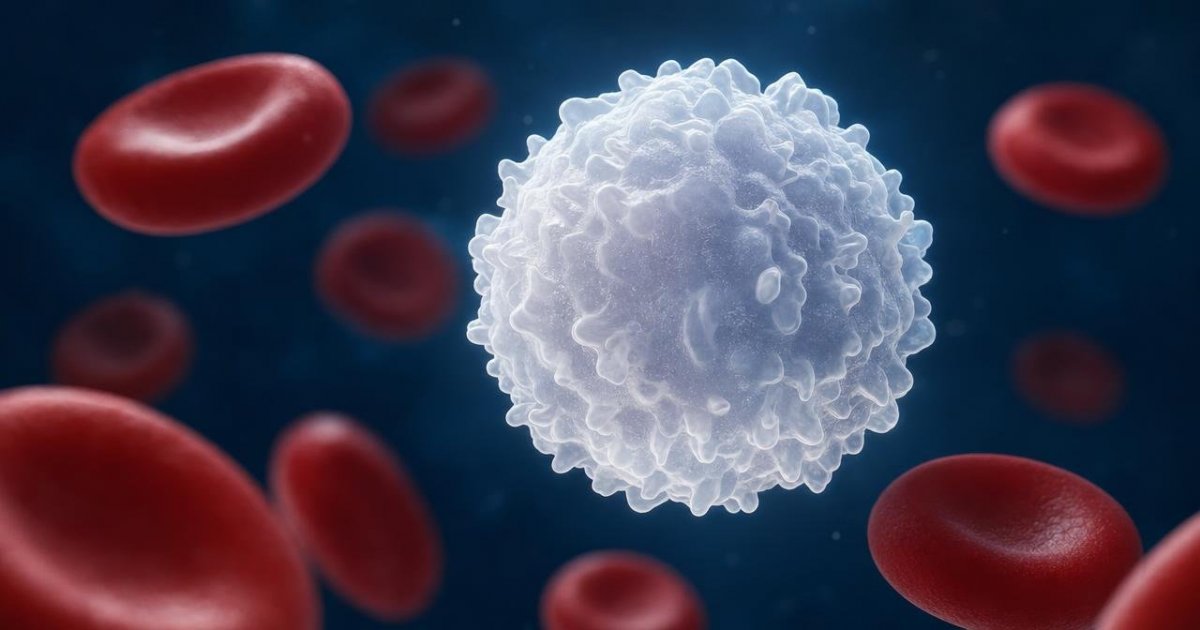
WBC (White blood cell count, White blood cells, Leukocytes, Leucocytes, Leukocyte count, WBC count, White count, Total white cell count)
White blood cells — also called leukocytes — are the immune system's mobile workforce. They are made in the bone marrow and released into the bloodstream, where they patrol for bacteria, viruses, parasites, allergens, and damaged cells. The WBC count is the single number that totals all five types circulating in your blood: neutrophils (the bacteria fighters), lymphocytes (the virus specialists and antibody makers), monocytes (the cleanup crew), and the rarer eosinophils and basophils (allergy and parasite responders).
Because white cells respond within hours to infection, inflammation, stress, and many medications, the WBC count is one of the most frequently checked numbers in medicine. It rises when the marrow ramps up production or releases its reserves — most often during infection — and falls when the marrow is suppressed, when cells are destroyed faster than they are made, or when they are trapped in an enlarged spleen.
For most healthy adults, US labs consider roughly 4.5 to 11.0 x10³/µL normal, which is the range MedlinePlus cites. The exact cutoffs vary slightly between laboratories, so always read your result against the reference range printed on your own report. And remember that the total is only the headline: the differential — the breakdown by cell type — usually tells the real story.
Reference ranges
Adults
Most US labs use roughly 4.5 to 11.0 x10³/µL as the adult reference range (the convention MedlinePlus cites), though some set the lower limit at 4.0 and the upper limit at 10.0 or 10.5. Critical-value cutoffs also vary by lab: below about 1.0–2.0 and above about 30–50 are the alarm thresholds most US laboratories use.
How to read your result
A low count (leukopenia, generally below 4.0–4.5) means fewer infection-fighting cells are circulating. Mild dips are common after viral illnesses and with certain medications, and some healthy people run lifelong lower counts; the practical question is the absolute neutrophil count, which determines actual infection risk. A high count (leukocytosis, above about 11.0) usually means the body is responding to something — infection, inflammation, injury, stress, or steroids — rather than that something is wrong with the blood itself.
Degree and direction of travel matter more than a single snapshot. A count of 12.5 during a chest cold is expected; a count of 25 with no explanation is not. Compare your result with your own past values, note anything going on around the draw (illness, stress, new medications), and look at which cell type is driving any change. Counts at the extremes — below about 2.0 or above about 30 — are treated as critical values by many labs and need same-day attention, and counts below 1.0 mean infection defenses are nearly absent.
What can shift this value
- Acute infection or inflammation — the most common reason counts rise
- Corticosteroids such as prednisone, which raise the count by pushing neutrophils into circulation
- Count-lowering drugs, including chemotherapy, immunosuppressants, clozapine, methimazole, and some antibiotics and anticonvulsants
- Smoking and nicotine, which cause a chronic mild elevation
- Intense exercise, pain, or emotional stress shortly before the draw — a temporary rise
- Pregnancy, which normally raises the count, especially in the third trimester and during labor
- Time of day — counts run somewhat higher in the afternoon than the early morning
- Inherited baseline: many people of African or Middle Eastern ancestry have a naturally lower count (Duffy-null associated neutrophil count) with no added infection risk
- Recent vaccination or a minor illness in the past few weeks — short-lived shifts in either direction
- Lab-to-lab differences in analyzers and reference ranges
When it's tested
The WBC count comes as part of every complete blood count (CBC), with or without a differential — the panel ordered at routine physicals, before surgery, in emergency-room workups, and whenever infection, inflammation, or a blood disorder is suspected. It is also checked on a schedule to monitor chemotherapy and drugs that can suppress white cells, such as clozapine and antithyroid medications. It is not part of a comprehensive metabolic panel (CMP) or a lipid panel.
The US unit x10³/µL and the SI unit x10⁹/L are numerically identical — 7.2 x10³/µL equals 7.2 x10⁹/L — and reports that show cells/µL (for example 7,200) are simply the same number multiplied by 1,000.
Frequently asked questions
Is your value a normal white blood cell count?
Most US labs consider roughly 4.5 to 11.0 x10³/µL normal for adults. Check the reference range printed on your own report, since cutoffs vary slightly between labs.
What white blood cell count is dangerously low or dangerously high?
There is no single universal cutoff, but many US labs treat a WBC below about 1.0 to 2.0 x10³/µL as a critical (panic) value, and set the high alarm somewhere between 30 and 50. Danger also depends on which cells are affected: a very low absolute neutrophil count (under 0.5) carries the highest infection risk, whatever the total shows.
Does a high WBC of your value mean I have leukemia?
Usually not. Infections, inflammation, stress, smoking, and steroid medicines are far more common reasons for a high count than leukemia. Clinicians look at the differential, a blood smear, your symptoms, and whether the count stays high before considering a blood cancer.
Can stress, exercise, or smoking raise my WBC count?
Yes. Physical or emotional stress, hard exercise shortly before the blood draw, smoking, and even late pregnancy all raise the count, mainly by shifting white cells that normally rest along blood-vessel walls into the circulating blood. These bumps are usually modest — typically into the 11 to 15 range — and settle within hours to days once the trigger passes.
How can I raise a low white blood cell count?
No food or supplement has been proven to reliably raise WBC. What works is treating the cause: stopping or switching a culprit medication, correcting a vitamin B12 or folate deficiency, treating an underlying infection or autoimmune condition, or — after chemotherapy — growth-factor injections your care team may prescribe. While the cause is being worked out, focus on infection prevention: hand washing, food safety, and the vaccines your clinician recommends.
Do I need to fast before a WBC test, and when should I retest?
No fasting is needed for a WBC count or a standard CBC (though if it is drawn alongside glucose or lipid tests, those may require fasting). Avoid intense exercise in the hours before the draw, since it can temporarily raise the count. For mildly abnormal results, a repeat in 2–6 weeks is typical; clearly abnormal results are rechecked much sooner — follow the timing your clinician recommends.
Browse WBC values
All 398 values from 0.3 to 40 x10³/µL
- 0.3
- 0.4
- 0.5
- 0.6
- 0.7
- 0.8
- 0.9
- 1.0
- 1.1
- 1.2
- 1.3
- 1.4
- 1.5
- 1.6
- 1.7
- 1.8
- 1.9
- 2.0
- 2.1
- 2.2
- 2.3
- 2.4
- 2.5
- 2.6
- 2.7
- 2.8
- 2.9
- 3.0
- 3.1
- 3.2
- 3.3
- 3.4
- 3.5
- 3.6
- 3.7
- 3.8
- 3.9
- 4.0
- 4.1
- 4.2
- 4.3
- 4.4
- 4.5
- 4.6
- 4.7
- 4.8
- 4.9
- 5.0
- 5.1
- 5.2
- 5.3
- 5.4
- 5.5
- 5.6
- 5.7
- 5.8
- 5.9
- 6.0
- 6.1
- 6.2
- 6.3
- 6.4
- 6.5
- 6.6
- 6.7
- 6.8
- 6.9
- 7.0
- 7.1
- 7.2
- 7.3
- 7.4
- 7.5
- 7.6
- 7.7
- 7.8
- 7.9
- 8.0
- 8.1
- 8.2
- 8.3
- 8.4
- 8.5
- 8.6
- 8.7
- 8.8
- 8.9
- 9.0
- 9.1
- 9.2
- 9.3
- 9.4
- 9.5
- 9.6
- 9.7
- 9.8
- 9.9
- 10.0
- 10.1
- 10.2
- 10.3
- 10.4
- 10.5
- 10.6
- 10.7
- 10.8
- 10.9
- 11.0
- 11.1
- 11.2
- 11.3
- 11.4
- 11.5
- 11.6
- 11.7
- 11.8
- 11.9
- 12.0
- 12.1
- 12.2
- 12.3
- 12.4
- 12.5
- 12.6
- 12.7
- 12.8
- 12.9
- 13.0
- 13.1
- 13.2
- 13.3
- 13.4
- 13.5
- 13.6
- 13.7
- 13.8
- 13.9
- 14.0
- 14.1
- 14.2
- 14.3
- 14.4
- 14.5
- 14.6
- 14.7
- 14.8
- 14.9
- 15.0
- 15.1
- 15.2
- 15.3
- 15.4
- 15.5
- 15.6
- 15.7
- 15.8
- 15.9
- 16.0
- 16.1
- 16.2
- 16.3
- 16.4
- 16.5
- 16.6
- 16.7
- 16.8
- 16.9
- 17.0
- 17.1
- 17.2
- 17.3
- 17.4
- 17.5
- 17.6
- 17.7
- 17.8
- 17.9
- 18.0
- 18.1
- 18.2
- 18.3
- 18.4
- 18.5
- 18.6
- 18.7
- 18.8
- 18.9
- 19.0
- 19.1
- 19.2
- 19.3
- 19.4
- 19.5
- 19.6
- 19.7
- 19.8
- 19.9
- 20.0
- 20.1
- 20.2
- 20.3
- 20.4
- 20.5
- 20.6
- 20.7
- 20.8
- 20.9
- 21.0
- 21.1
- 21.2
- 21.3
- 21.4
- 21.5
- 21.6
- 21.7
- 21.8
- 21.9
- 22.0
- 22.1
- 22.2
- 22.3
- 22.4
- 22.5
- 22.6
- 22.7
- 22.8
- 22.9
- 23.0
- 23.1
- 23.2
- 23.3
- 23.4
- 23.5
- 23.6
- 23.7
- 23.8
- 23.9
- 24.0
- 24.1
- 24.2
- 24.3
- 24.4
- 24.5
- 24.6
- 24.7
- 24.8
- 24.9
- 25.0
- 25.1
- 25.2
- 25.3
- 25.4
- 25.5
- 25.6
- 25.7
- 25.8
- 25.9
- 26.0
- 26.1
- 26.2
- 26.3
- 26.4
- 26.5
- 26.6
- 26.7
- 26.8
- 26.9
- 27.0
- 27.1
- 27.2
- 27.3
- 27.4
- 27.5
- 27.6
- 27.7
- 27.8
- 27.9
- 28.0
- 28.1
- 28.2
- 28.3
- 28.4
- 28.5
- 28.6
- 28.7
- 28.8
- 28.9
- 29.0
- 29.1
- 29.2
- 29.3
- 29.4
- 29.5
- 29.6
- 29.7
- 29.8
- 29.9
- 30.0
- 30.1
- 30.2
- 30.3
- 30.4
- 30.5
- 30.6
- 30.7
- 30.8
- 30.9
- 31.0
- 31.1
- 31.2
- 31.3
- 31.4
- 31.5
- 31.6
- 31.7
- 31.8
- 31.9
- 32.0
- 32.1
- 32.2
- 32.3
- 32.4
- 32.5
- 32.6
- 32.7
- 32.8
- 32.9
- 33.0
- 33.1
- 33.2
- 33.3
- 33.4
- 33.5
- 33.6
- 33.7
- 33.8
- 33.9
- 34.0
- 34.1
- 34.2
- 34.3
- 34.4
- 34.5
- 34.6
- 34.7
- 34.8
- 34.9
- 35.0
- 35.1
- 35.2
- 35.3
- 35.4
- 35.5
- 35.6
- 35.7
- 35.8
- 35.9
- 36.0
- 36.1
- 36.2
- 36.3
- 36.4
- 36.5
- 36.6
- 36.7
- 36.8
- 36.9
- 37.0
- 37.1
- 37.2
- 37.3
- 37.4
- 37.5
- 37.6
- 37.7
- 37.8
- 37.9
- 38.0
- 38.1
- 38.2
- 38.3
- 38.4
- 38.5
- 38.6
- 38.7
- 38.8
- 38.9
- 39.0
- 39.1
- 39.2
- 39.3
- 39.4
- 39.5
- 39.6
- 39.7
- 39.8
- 39.9
- 40.0
Sources
- White Blood Count (WBC) — MedlinePlus, National Library of Medicine
- WBC count — MedlinePlus Medical Encyclopedia
- Low white blood cell count — Mayo Clinic
- High white blood cell count — Mayo Clinic
- Leukocytosis (StatPearls) — NCBI Bookshelf
Educational information, not medical advice. Full disclaimer